Supplements to Take with Tirzepatide: What Works and What's Waste
Starting tirzepatide can feel like unlocking a powerful tool for weight management and blood sugar control. But here's what many people discover a few weeks in: the medication works brilliantly at reducing appetite and improving metabolic markers, yet they're noticing a bit of fatigue, worried about losing muscle along with fat, and some people dealing with persistent nausea.
The question isn't whether tirzepatide is effective—it clearly is. The real question is how to support your body through the significant metabolic shifts it creates. The right supplements to take with tirzepatide aren't about enhancing the medication's effects or speeding up weight loss. They're about filling nutritional gaps that emerge when you're eating significantly less, managing side effects that can derail your progress, and protecting the muscle mass you want to keep.
This isn't about swallowing handfuls of pills or buying into supplement industry hype. It's about strategic support based on how tirzepatide actually works in your body—the reduced food intake, the slower gastric emptying, the metabolic changes that affect nutrient absorption. Some supplements address genuine physiological needs. Others are expensive distractions. Let's separate the two.
Why supplement support matters on Tirzepatide
Tirzepatide works by mimicking two hormones—GIP and GLP-1—that dramatically reduce appetite and slow how quickly food moves through your digestive system. This is exactly why GLP-1 medications have become the most effective weight loss tools available. But these same mechanisms create a nutritional paradox: your body still needs the same vitamins, minerals, and macronutrients, but you're consuming far fewer calories to obtain them.
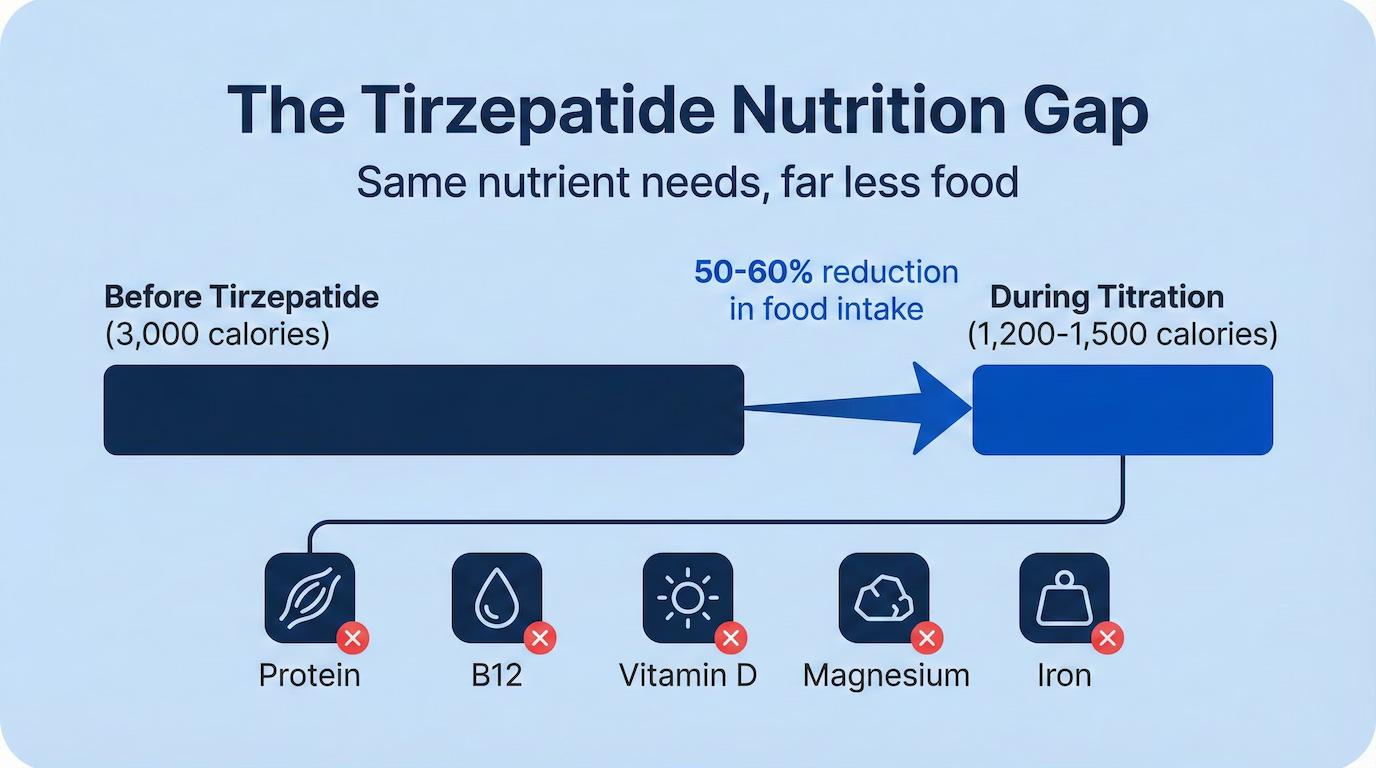
Consider what happens when someone drops from eating 3,000+ calories daily to 1,500 or even 1,200 calories during the early titration phase. That's not just a 40% reduction in calories—it's a 40% reduction in every nutrient those foods contained. If you were barely meeting your protein needs before, you're definitely falling short now. If your vitamin D was suboptimal, it's likely deficient now.
The slower gastric emptying adds another layer. When food sits in your stomach longer, it can affect how well you absorb certain nutrients, particularly those that require adequate stomach acid for absorption like vitamin B12, iron, and calcium.
Here's a concrete example: Sarah, on month three of tirzepatide, started experiencing severe fatigue despite losing 22 pounds. Her labs revealed she'd become anemic—not because tirzepatide caused anemia, but because she'd unconsciously eliminated most red meat from her diet (it made her feel too full), and she wasn't compensating with iron-rich plant foods or supplements. Her body was running a calorie deficit successfully, but also running a nutrient deficit unsuccessfully.
This is why supplementation matters. You're asking your body to function optimally during significant metabolic remodeling while providing it with less raw material. Strategic supplementation bridges that gap.
The non-negotiables: Supplements most Tirzepatide users should consider
Some supplements aren't optional when you're on tirzepatide—they address fundamental needs that are nearly impossible to meet through reduced food intake alone. These are your foundation.
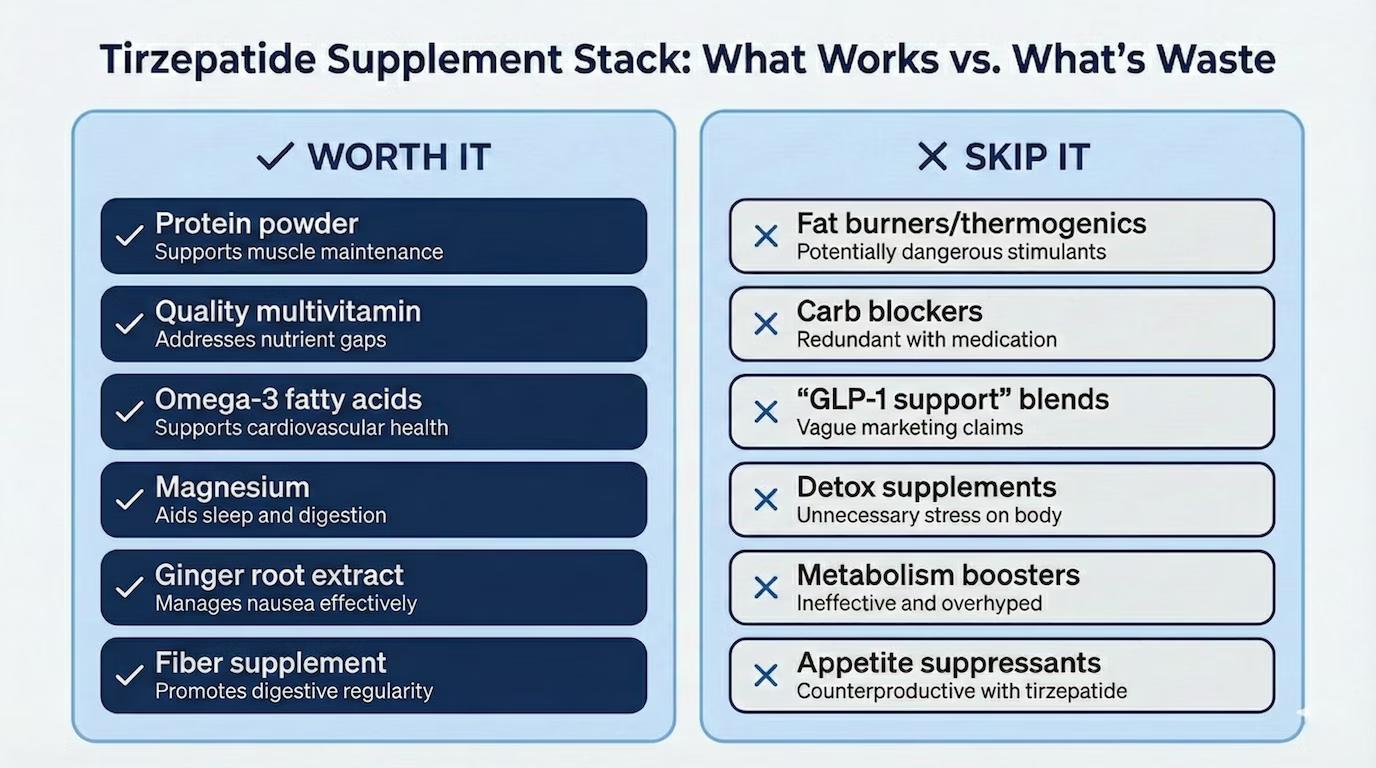
Protein powder
Protein powder tops the list, and here's why it's not negotiable: you need roughly 0.7-1 gram of protein per pound of ideal body weight to preserve muscle mass during weight loss. If your goal weight is 150 pounds, that's 105-150 grams of protein daily. When you're struggling to eat a full meal, hitting that target with whole foods becomes genuinely difficult. A quality whey or plant-based protein powder (20-30 grams per serving) makes the math work. Real-world example: mixing a scoop into your morning coffee or a small smoothie delivers substantial protein without triggering the fullness that makes eating chicken breast feel impossible.
Multivitamin with minerals
Multivitamin with minerals serves as your nutritional insurance policy. Look for one containing methylated B vitamins (especially B12), adequate vitamin D3 (up to 10,000 IU), and essential minerals like zinc and selenium. The methylated forms matter because some people don't convert synthetic vitamins efficiently. A prescription multivitamin covers these bases with pharmaceutical-grade ingredients.
Omega-3 fatty acids
Omega-3 fatty acids (EPA/DHA) are critical because they're concentrated in foods many tirzepatide users eat less of—fatty fish, particularly. Aim for 1,000-2,000mg of combined EPA/DHA daily. Not all fish oil supplements are equal – higher quality options offer better purity and absorption.
Electrolytes
Electrolytes deserve mention because the fluid shifts and dietary changes on tirzepatide can deplete sodium, potassium, and magnesium quickly, leading to headaches, muscle cramps, and that draggy feeling. A comprehensive multivitamin like Building Blocks covers your magnesium needs (200mg of highly-absorbable magnesium malate), but if you're experiencing significant symptoms or are highly active, a dedicated electrolyte powder (not sugary sports drinks) can fill the sodium and potassium gaps.
Targeted support: Supplements for specific Tirzepatide side effects
Beyond foundational nutrition, certain supplements directly address the side effects that make tirzepatide challenging for some to tolerate, especially during dose increases.
Ginger root extract
Ginger root extract (500-1,000mg) has solid research backing its anti-nausea effects. It works by accelerating gastric emptying—which might seem counterintuitive since tirzepatide slows it, but that's exactly the point. Taking ginger 30 minutes before meals can reduce that overwhelming nausea that makes even the thought of food unappealing. Some users find ginger tea or ginger chews work similarly, though the extract provides more consistent dosing.
Magnesium glycinate
Magnesium glycinate (300-400mg) addresses multiple issues: it helps with the constipation some users experience, supports sleep quality (which often suffers during initial weight loss), and reduces muscle cramps. The glycinate form is gentler on the stomach than magnesium oxide and better absorbed. Take it in the evening for the added sleep benefit.
Probiotics
Probiotics with diverse strains support gut health during the digestive changes tirzepatide creates. Look for one with at least 10 billion CFUs and multiple Lactobacillus and Bifidobacterium strains. This is particularly valuable if you're experiencing irregular bowel movements or digestive discomfort.
The key is addressing your specific side effects, not taking everything preemptively. If nausea isn't your issue, skip the ginger.If your bowel movements are normal, there may be no need for the probiotic.
What about metabolism boosters and fat burners?
Let's address the elephant in the room: the supplement industry wants you to believe you can supercharge tirzepatide's effects with metabolism boosters, thermogenics, and fat burners. This is largely nonsense, and potentially dangerous nonsense at that.
Tirzepatide already works through powerful hormonal pathways that regulate appetite and glucose metabolism. It's not a metabolism booster itself—it changes how your body responds to food and manages energy. Adding stimulant-based "fat burners" doesn't enhance this mechanism; it just adds stimulants to your system.
Common ingredients in these products (caffeine, synephrine, yohimbine) can increase heart rate and blood pressure. When you're already on a medication that's creating metabolic changes and often reducing calorie intake substantially, adding cardiac stimulants is asking for trouble. Some users report feeling jittery, anxious, or experiencing heart palpitations when combining these products with tirzepatide.
Here's a concrete example of the faulty logic: Jake bought a "thermogenic" supplement containing 400mg of caffeine per serving (about four cups of coffee) plus green tea extract and cayenne, thinking it would accelerate his weight loss on tirzepatide. Instead, he experienced severe anxiety, couldn't sleep, and his blood pressure spiked—forcing him to stop both the supplement and temporarily reduce his tirzepatide dose. His weight loss didn't accelerate; it stalled because the stress hormones from excessive stimulation actually counteract fat loss.
The only "metabolism support" supplements worth considering are those addressing deficiencies that genuinely slow metabolism—like adequate protein for muscle maintenance, vitamin D if deficient, or iron if anemic. These aren't boosters; they're correctives.
Save your money. Tirzepatide is already doing the heavy metabolic lifting. Your job is supporting your body's basic functions, not turbocharging an already powerful medication.
Supplement timing and absorption: What you need to know
Taking the right supplements matters. Taking them at the right time matters almost as much, especially when you're dealing with tirzepatide's effects on digestion and the limited eating windows many users experience.
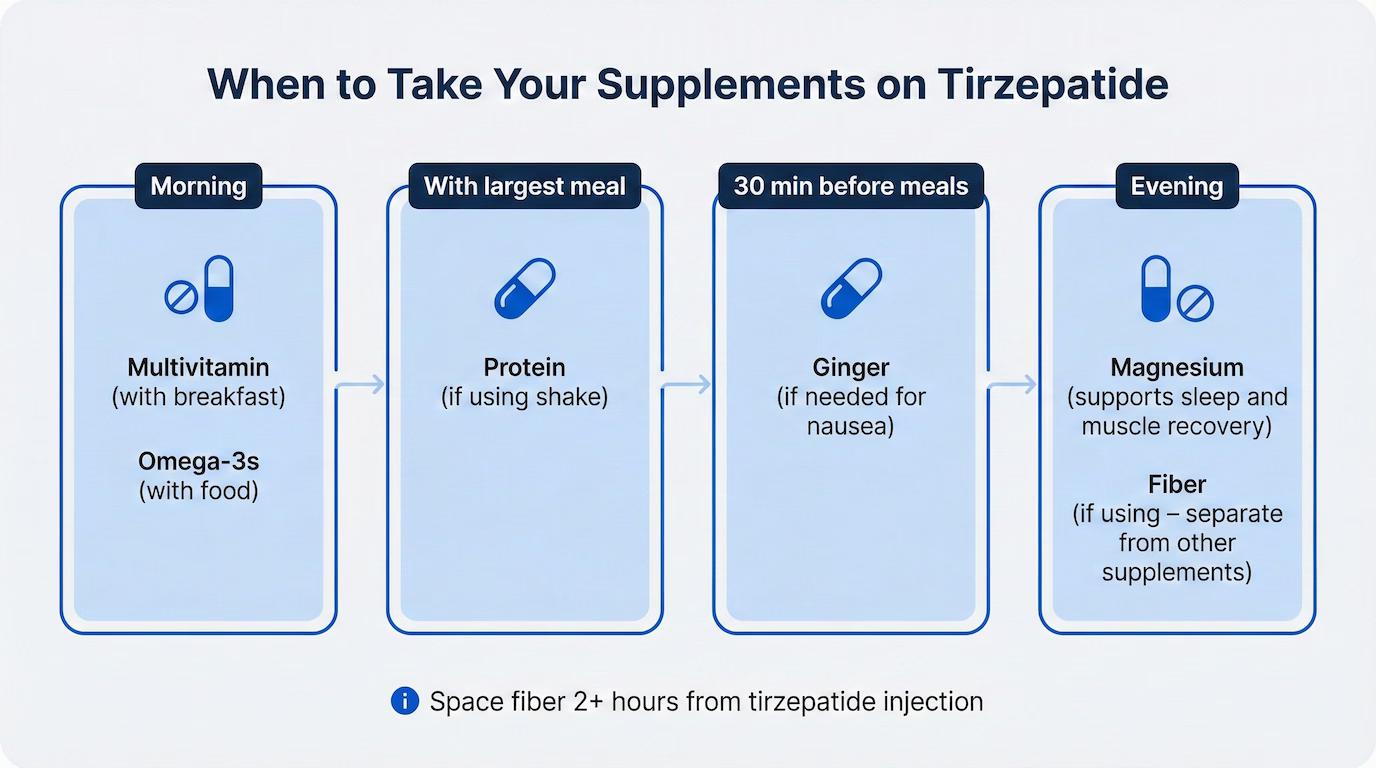
Protein powder works best post-meal or as a mini-meal rather than on an empty stomach, which can trigger nausea in tirzepatide users. Many find success with a small protein-rich snack in the late morning or afternoon when the medication's appetite suppression lightens slightly. Trying to drink a thick shake first thing in the morning when nausea tends to peak? That's a recipe for misery.
Fat-soluble vitamins (A, D, E, K) require dietary fat for absorption. On tirzepatide, when you're eating less fat overall, take these with your meal that contains some fat—even just a small amount of olive oil, avocado, or nuts. Taking vitamin D on an empty stomach essentially wastes it; absorption can be reduced by up to 50%.
Iron and calcium compete for absorption, so separate them by at least two hours. Additionally, calcium can interfere with thyroid medication absorption if you're taking levothyroxine. Here's a practical schedule: thyroid medication first thing in the morning on empty stomach, calcium with lunch, iron with dinner (with vitamin C to enhance absorption).
Magnesium glycinate taken before bed serves double duty—supporting overnight recovery and promoting better sleep. Taking it in the morning wastes the sleep benefits and may cause daytime drowsiness in some people.
Example timing framework: Morning (with breakfast): multivitamin, omega-3, probiotic. Afternoon: protein supplement. Evening (with dinner or before bed): magnesium, vitamin D if not taken morning. This spreads absorption throughout the day and matches supplements with when they're most effective.
The supplements you can probably skip
The supplement industry thrives on creating problems that don't exist and selling solutions you don't need. When you're on tirzepatide, some heavily marketed supplements are particularly pointless—or worse, counterproductive.
Appetite suppressants are the most absurd category. You're literally taking a medication that powerfully suppresses appetite through hormonal mechanisms. Adding hoodia, garcinia cambogia, or glucomannan is like bringing a squirt gun to a fire station. They don't enhance tirzepatide; they just empty your wallet. Worse, some contain stimulants that can cause the cardiac issues mentioned earlier.
"Carb blockers" and "fat blockers" are solving a problem you don't have. White kidney bean extract and similar products supposedly prevent carbohydrate or fat absorption. But you're already eating dramatically less on tirzepatide—why would you want to block absorption of the limited nutrients you're consuming? These products can cause digestive distress and potentially worsen nutrient deficiencies.
Detox and cleanse supplements are pseudoscientific nonsense in general, and particularly unhelpful when your body is already under metabolic stress from significant weight loss. Your liver and kidneys handle detoxification perfectly well without expensive tea blends or "liver support" formulas. Example: Maria spent $80 on a "metabolic detox kit" promising to "flush toxins released during fat loss." She experienced diarrhea and dehydration, lost no additional weight, and felt considerably worse.
Collagen supplements for "preventing loose skin" have minimal evidence supporting this specific claim. While collagen may support joint health, the idea that consuming it prevents loose skin during weight loss isn't backed by robust research. You're better off investing in adequate protein and vitamin C (which supports your body's own collagen production).
When in doubt, ask: "What specific deficiency or problem does this address?" If the answer is vague marketing speak, skip it.
A practical framework to build your Tirzepatide supplement stack
Rather than drowning in dozens of bottles, build your supplement strategy in tiers based on actual need, not marketing claims. This framework helps you spend wisely and supplement strategically.
Tier 1 (Foundation—start here):
These address nearly universal needs when eating significantly less. Begin with a quality multivitamin, protein powder, and omega-3s. This covers micronutrient insurance and the two macronutrients (protein and essential fats) most challenging to obtain in adequate amounts. Total monthly cost: roughly $50-70.
Tier 2 (Symptom management—add as needed):
Layer these in based on your actual side effects. Experiencing nausea? Add ginger. Constipated? Magnesium glycinate. Digestive discomfort? Digestive enzymes. Don't take all of them prophylactically—add them as specific needs emerge, and discontinue if symptoms resolve. This prevents both unnecessary expense and taking pills you don't need.
Tier 3 (Deficiency correction—lab-based):
These require actual blood work showing a deficiency: extra vitamin D if levels are below 30 ng/mL, iron if ferritin is low, B12 if levels drop. Don't guess at these—test and address specific deficiencies. Excess supplementation of iron or B12 when you don't need it can cause problems.
Here's a concrete example: Month one on tirzepatide, start with Tier 1 only. At your three-month follow-up, get comprehensive labs. If you're deficient in vitamin D and iron, add targeted doses of each (Tier 3). If you've developed persistent nausea with dose increases, add ginger (Tier 2). This methodical approach prevents the common mistake of buying fifteen supplements on day one, taking them inconsistently, and having no idea what's actually helping.
Remember: more isn't better. Strategic is better.
What about food first? When whole foods beat supplements
Supplements are exactly what their name implies—they supplement your diet, not replace it. Even with tirzepatide dramatically reducing your appetite, food-first strategies should drive your approach whenever possible.
Protein from whole foods provides more than just amino acids—it comes packaged with other beneficial nutrients. Greek yogurt delivers protein plus calcium and probiotics. Eggs provide protein plus choline and vitamin D. Supplements give you isolated nutrients; food gives you the full nutritional package. When you can manage it, eating a palm-sized portion of chicken, fish, or tofu beats a protein shake nutritionally, even if the protein content is similar.
Here's the practical challenge on tirzepatide: volume. Many users find their food preferences shift dramatically—formerly appealing foods may become unappealing, making dietary planning even more important. You might need 150+ grams of protein but can only comfortably eat 1,200-1,500 calories daily.
Mineral-rich foods beat supplements for absorption and utilization in most cases. Spinach and pumpkin seeds provide magnesium with fiber and other micronutrients. Wild salmon delivers omega-3s plus selenium and B vitamins. The synergistic effect of nutrients in whole foods often enhances bioavailability compared to isolated supplement forms.
But here's where supplements win: consistency and concentration. If eating cooked spinach makes you nauseated right now, magnesium glycinate ensures you still get this essential mineral. If the thought of swallowing fish oil makes you gag (common on tirzepatide), a small capsule beats forcing down salmon when you're not hungry.
The framework: Choose food when you can tolerate it and have room in your reduced calorie budget. Choose supplements when volume, appetite, or tolerance makes food-based intake insufficient. Most people on tirzepatide need both.
Safety considerations and when to consult your provider
Supplements seem benign because they're sold over-the-counter, but they can interact with medications, mask underlying problems, or cause issues when taken inappropriately—especially when combined with a powerful medication like tirzepatide.
Always disclose supplements to your prescribing provider, including those that seem innocuous. St. John's Wort, for instance, can interact with numerous medications. High-dose biotin can skew thyroid lab results, leading to incorrect dose adjustments if your provider doesn't know you're taking it. Fish oil can increase bleeding risk if you're scheduled for surgery or taking anticoagulants.
Certain situations demand immediate medical consultation, not self-supplementation. If you're experiencing severe fatigue, don't just start taking iron supplements—get labs done. You could have anemia, thyroid dysfunction, or another condition that requires specific treatment. Masking symptoms with supplements can delay proper diagnosis.
Here's a real scenario: David started experiencing persistent numbness in his feet after four months on tirzepatide. He read that B-vitamin deficiency could cause this and started taking high-dose B-complex supplements. The numbness persisted because it wasn't a deficiency—he'd developed diabetic neuropathy that required different management. He lost three months of appropriate treatment by self-diagnosing.
Be particularly cautious with these supplement categories: Anything marketed for liver or kidney support (could mask organ dysfunction), supplements containing multiple herbal ingredients (higher interaction risk), and anything making dramatic health claims. The FDA doesn't regulate supplements like medications, so quality and safety vary wildly.
Red flags that require immediate provider consultation: severe GI symptoms, chest pain or heart palpitations, significant mood changes, severe fatigue despite adequate sleep, any neurological symptoms, or persistent symptoms despite supplementation. These could indicate medication side effects, deficiencies requiring prescription-strength treatment, or unrelated medical issues.
Your provider should be your partner, not an obstacle. Present your supplement plan proactively at appointments.
What matters is strategic support, not more pills
The supplements to take with tirzepatide aren't about enhancing the medication's already powerful effects or hacking your way to faster weight loss. They're about supporting your body through significant physiological changes—meeting nutritional needs when you're eating less, managing side effects that affect quality of life, and preserving muscle and health markers during weight loss.
Start simple: protein powder, a quality multivitamin, and omega-3s form your foundation. Add targeted support as specific needs emerge—ginger for nausea, magnesium for constipation and sleep, digestive enzymes for comfort. Get labs done at reasonable intervals to address actual deficiencies, not imagined ones. Skip the expensive (and often bogus) fat burners, detoxes, and metabolism boosters that promise shortcuts but deliver mostly marketing.
Remember that supplements supplement a solid nutritional foundation—they don't replace it. Prioritize whole foods when you can tolerate them, use supplements to bridge gaps when you can't, and always keep your healthcare provider informed about what you're taking.
Your next step:
Audit your current supplement routine against the framework in this article. What's actually serving a purpose? What can you eliminate? What gaps should you address?
If you're looking for a streamlined approach, our Building Blocks multivitamin was formulated specifically for GLP-1 users to cover your foundational vitamins, minerals, and digestive enzymes in one daily dose. No guesswork, no cabinet full of bottles.
Already on tirzepatide or considering it? Explore our medically-supervised tirzepatide protocol to ensure you're getting the clinical support and monitoring that maximizes your results.
Then, focus on execution. The right supplements taken consistently beat a perfect plan followed sporadically.